Anthropocenes
Artists, researchers, and communities co-create performances and river-side events to explore water systems, climate change, and sustainable futures through open dialogue.
Country
Germany
Duration
2021–2024
Lead partners
Humboldt University (technical lead), in collaboration with Free University Berlin (FU) and Technical University Berlin (TU) through the Berlin University Alliance
Societal areas of impact
Climate & Environmental Sustainability
Process
Joint research, Intermediation, Engagement, Dissemination
Brief Description
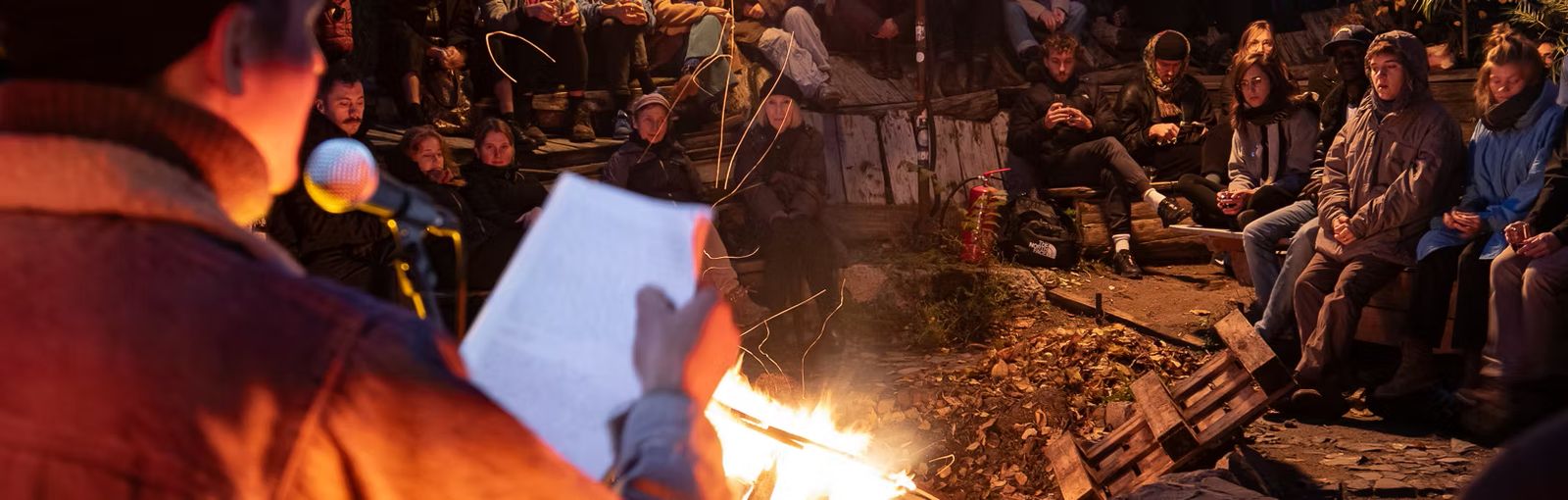
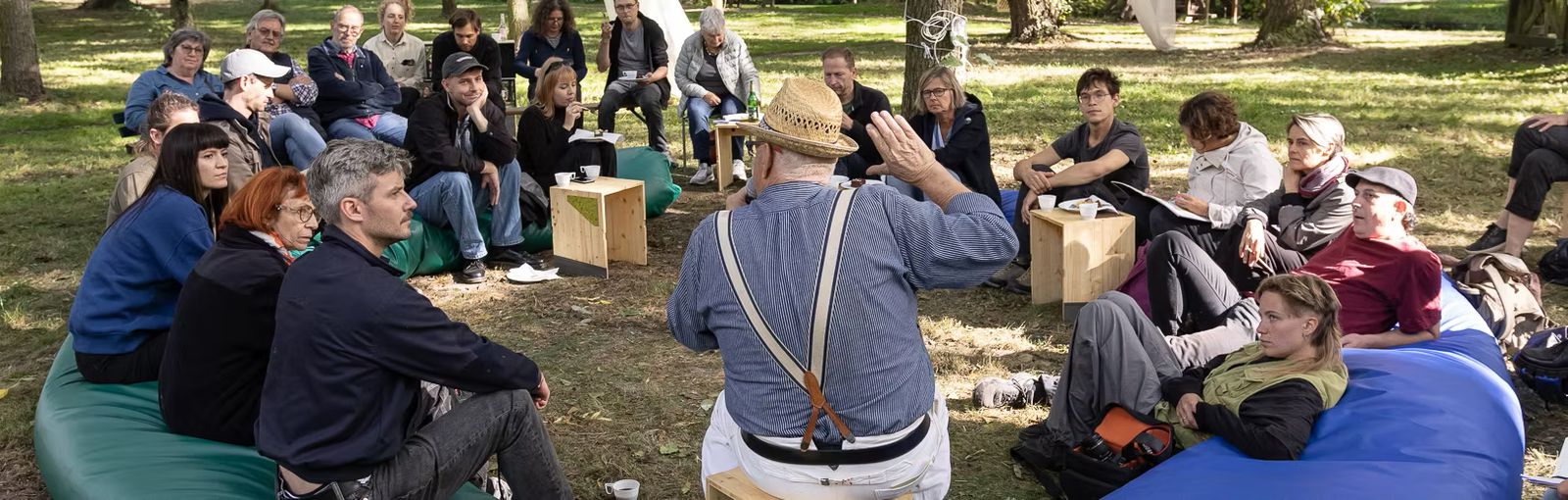
Anthropocenes brought together scientists, artists, and citizens to experiment with new formats for multidirectional conversations about water and climate change. Through performances, installations, exhibitions, and participatory events, the project explored environmental research in accessible, creative ways while generating new collaborations, academic reflections, and long-term networks.
Collaboration Methodology
Workshops and residencies were held mostly in person, with early online meetings due to COVID-19. Emphasis was placed on trust-building, shared language, and long-term relationship-building across disciplines.
Interview
Pauline Münch, AnthropoScenes Project Coordinator and Science Communicator, Humboldt-Universität zu Berlin, Germany (November 2025)
Successes
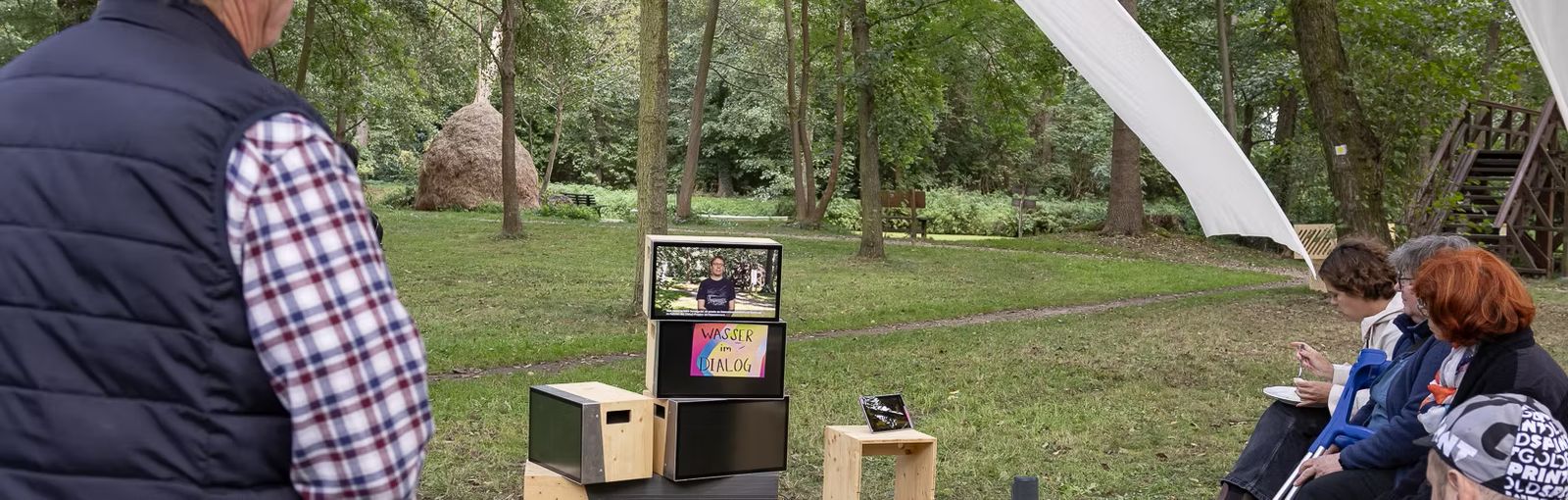
- The River Stories series successfully brought together citizens, artists, and scientists through a place-based collaboration centred on an active research region. It included mini residencies, a local exhibition, boat transport of artworks to Berlin for a second exhibition, and a documentary film. Several installation elements continue to be used in other events. River Stories generated multiple types of outcomes, bridged disciplines, connected rural and urban areas, and fostered dialogue between art, science, and citizens.
- Long-lasting professional networks formed across disciplines and institutions.
Challenges
- Severe time constraints for artists and researchers to work together and develop a mutual language.
- Limited staffing and funding (only one part-time project coordinator and one part-time evaluator).
- Difficulty reaching rural audiences and identifying appropriate outreach channels within tight timeframes.
- Short collaboration periods limiting depth of creative immersion.
- Funding structures that constrained sustained co-creation.
- Difficulty evaluating artistic impact in standard academic or institutional frameworks.
Stakeholders & Participants

Artists
Artists from diverse disciplines — including theatre, film, photography, set design, and inclusive performance — were recruited organically through existing networks and word-of-mouth. Some worked independently with scientists as consultants, while others co-created installations and exhibitions reflecting research findings. Groups such as Berlin's RambaZamba inclusive theatre ensemble participated in productions involving large casts and public performances.

Researchers
Researchers were primarily drawn from the CliWaC consortium and included anthropologists, hydrologists, and data scientists from Berlin universities. Levels of engagement varied depending on availability. Highly involved researchers collaborated directly with artists on creative formats, contributed expertise, and co-authored academic publications and reflective evaluations.

Citizens
Citizens participated by attending performances, contributing to installations (e.g. leaving messages, drawings, and writing "letters to the river"), joining workshops, and performing in community events. Rural residents in Brandenburg, urban Berliners, children, and families were included, though reaching non-academic audiences required sustained outreach.

Other Stakeholders
Science communicators served as facilitators, with a central project coordinator connecting disciplines, attending research meetings, matching artists and scientists, and facilitating collaboration.
Knowledge Valorisation

Main Outputs
Theatre performances, exhibitions, films, participatory installations, blog posts, evaluation report, and festivals. In the longer term, the project also generated conference presentations and panel discussions, with academic publications currently in preparation.

Societal Value
Encouraged public dialogue about water, climate change, and sustainable futures; connected rural and urban communities; increased trust and understanding between science and society.

Cultural Value
Created new artistic works rooted in environmental research; strengthened art–science networks; fostered inclusive cultural participation.
Knowledge Transfer
Scientists gained new communication tools and artists accessed scientific insight. Lessons learned about art–science collaboration were published and shared through academic and public channels.

Creative Methods
Riverside pop-up installations, boat-transported exhibitions, participatory writing and drawing, immersive installations, theatrical storytelling, and mini residencies embedded in active research areas.

Unexpected Impact
Continuation of networks beyond the funded project period; follow-up festivals; international recognition; reuse of installations in later events; continued use of the project website as a platform for new activities aligned with the project's themes. The project coordinator was recognised among Berlin's Top 100 Influential Scientists, and the project was selected as a Falling Walls Science Engagement Finalist in 2024.
Partcipatory processes
Joint Research
Researchers and artists co-developed installations, exhibitions, and performances to spark multidirectional discussions on water. Anthropologists collaborated with set designers to embed research into materials and spatial design. The project also generated blog posts, conference presentations, academic publications, and reflective evaluation reports on art–science collaboration methods.
Intermediation
The science communication coordinator played a central role in connecting disciplines, attending research meetings, matching artists and scientists, and facilitating collaboration. Events and workshops created spaces where all participants contributed equally. Flexible structures allowed projects to evolve organically rather than follow a fixed methodology.
Engagement
Public participation occurred through free events, performances, pop-up exhibitions by rivers, festivals, and Berlin-wide science events. Citizens contributed stories, drawings, and performances, including kindergarten groups. Outreach included social media, mailing lists, posters, collaboration with major events like Berlin Science Week, and rural community engagement.
Dissemination
Outputs included theatre productions, riverside exhibitions, participatory installations, films, conference panels, blog posts, academic papers, festivals, and media coverage. A major project (River Stories) toured installations by boat from Brandenburg to Berlin and resulted in a film still used in later events.
Explore
Further Info