Carbon Dioxide Theatre
Young people, artists, and researchers use participatory theatre and film in a museum to explore climate change and consumption.
Country
Sweden
Duration
2018–2020
Lead partners
Västmanland County Museum, RISE Research Institutes of Sweden, and the University of Southern Denmark
Societal areas of impact
Climate & Environmental Sustainability
Process
Joint research, Intermediation, Engagement, Dissemination
Brief Description
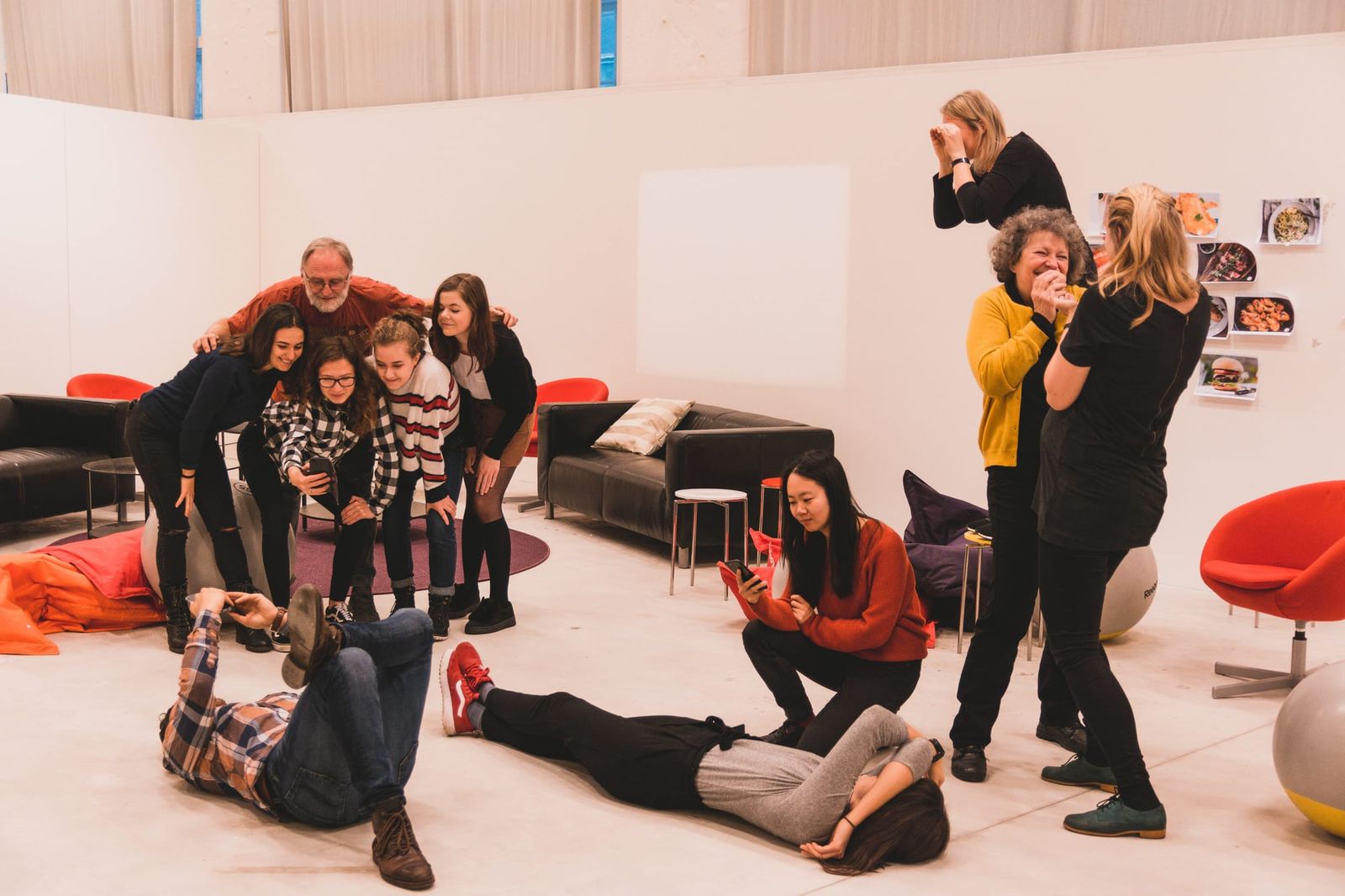
Carbon Dioxide Theatre explored how participatory theatre and design methods can be used in a museum setting to engage people with climate change. The project brought together researchers, actors, designers, museum staff, and young people to explore everyday situations connected to the environment and consumption through creative, embodied practices.
Workshops were held at the museum, where 10–15 young participants used theatre improvisation, props, and film to visualise facts about climate change. Props such as balls of different sizes visualised facts around climate change, while short videos told the “life stories” of museum objects, filmed on participants’ mobile phones.
The project aimed to make scientific knowledge tangible and emotional, and to offer young people a way to discuss their climate concerns while building hope and collective action.
Collaboration Methodology
Researchers, actors, designers, and museum staff co-developed the project, working together on the funding application through a highly collaborative process. Once underway, all participants were expected to participate in the workshops and the development of the project was decided through democratic, participatory processes.
Workshops were held at the museum and deliberately flexible and not planned in detail, allowing space for participants’ own ideas. In one case, everyone was asked to bring a friend, doubling participation.
Interview
Case study based on an interview conducted with Dr Jennie Schaeffer, Head of Västmanland county museum and docent in Information Design and Affiliate Researcher, Mälardalen University, Sweden (October 2025).
Successes
- Strong commitment and collaboration between experienced artists, researchers, and museum staff.
- Effective use of participatory theatre for learning and team-building.
- Meaningful involvement of young people in decision-making and creative processes.
Challenges
- Balancing participants’ expectations: the young participants wanted to continue with new activities that were not in the original project plan.
- Coordinating a funding proposal across multiple countries and disciplines.
Stakeholders & Participants

Artists
Actors and designers, including some PhD students and researchers affiliated with the Theatre Lab at the University of Southern Denmark, which uses participatory theatre in teaching and research.

Researchers
Specialists in participatory theatre, human–computer interaction, and design for sustainability and social change from RISE and the University of Southern Denmark.

Citizens
Citizens aged 15–20, recruited through schools, theatre schools, and other regional networks. Some were members of a theatre group for migrants.

Other Stakeholders
Museum staff acted as hosts and facilitators, integrating the workshops into regular museum activities.
Knowledge Valorisation

Main Outputs
- Workshop series and youth-led performances at the museum
- Pop-up exhibitions and short films about climate change and consumption
- A co-authored downloadable book on the Carbon Dioxide Theatre method downloadable book (available in English and Swedish)
- Academic publication on new ways for researchers to work with theatre and objects

Societal Value
The project explored and developed new methods for learning about climate change, consumerism, and the environment. It strengthened intergenerational dialogue and gave young people a sense of agency and hope in facing climate anxiety.

Cultural Value
Demonstrated how museums can use theatre to engage audiences in complex topics like sustainability and climate action, turning research into lived experience.
Knowledge Transfer
Participants experimented with new ways of visualising facts about climate change through creative media. The project’s outcomes were shared in professional networks, media coverage, and museum conferences.

Creative Methods
Participatory theatre, improvisation, object storytelling, prop-based visualisation, and filmmaking. A new method for working with theatre at museums was developed.

Unexpected Impact
Young participants described feeling listened to by adults for the first time and left the project with a sense of hope - transforming initial climate anxiety into constructive engagement.
Partcipatory processes
Joint Research
The project gave researchers new perspectives on their own research. A RISE researcher who had never worked with theatre before co-created new ways to visualise research using props. A PhD student from the University of Southern Denmark created a new method for using theatre to explore the “life stories” of museum objects. The collaboration also informed academic publications on participatory design and theatre-based methods.
Intermediation
The workshops brought together artists, researchers, and young participants as equal contributors. Through shared creative exercises, the group built trust and a safe environment for open discussion about climate change
Engagement
After the initial workshops, the young participants were employed by the museum during two consecutive summers to create public performances and exhibitions. They also conducted intergenerational interviews with older citizens about their relationships with consumption, and the elderly participants were invited to write letters to the teenagers in an exhibition they made.
Dissemination
The methods made research on climate change visible and accessible through theatre and film. Public performances and exhibitions shared the young people’s interpretations with wider audiences, and a book documenting the method was produced together with the participants
Explore
Further Info