I Sit and Worry About Her
An art–science performance transforming mothers’ brainwave data into live music, using EEG and improvisation to explore empathy, care, and emotional connection.
Country
Serbia
Duration
February–November 2019
Lead partners
Center for the Promotion of Science (CPN), Serbia, in collaboration with the University of Belgrade, School of Electrical Engineering (Biomedical Instrumentation and Technology Lab).
Societal areas of impact
Health & Wellbeing, Equity, Diversity & Inclusion, Culture, Memory & Identity
Process
Joint research, Intermediation, Engagement, Dissemination
Brief Description
I Sit and Worry About Her was an art–science performance created by Serbian saxophonist and composer Jasna Jovićević, as part of Center for the Promotion of Science (CPN)’s art+neuroscience programme within the European ARTificial Intelligence Lab, funded by Creative Europe.
The work explored the emotional connection between mothers and daughters through the sonification of real-time EEG brainwave data. Mothers’ brain activity was recorded as they listened to improvised music and pre-recorded messages from their daughters, revealing emotional responses in sound. The piece transformed invisible neural signals into audible compositions that captured maternal empathy, anxiety, and care.
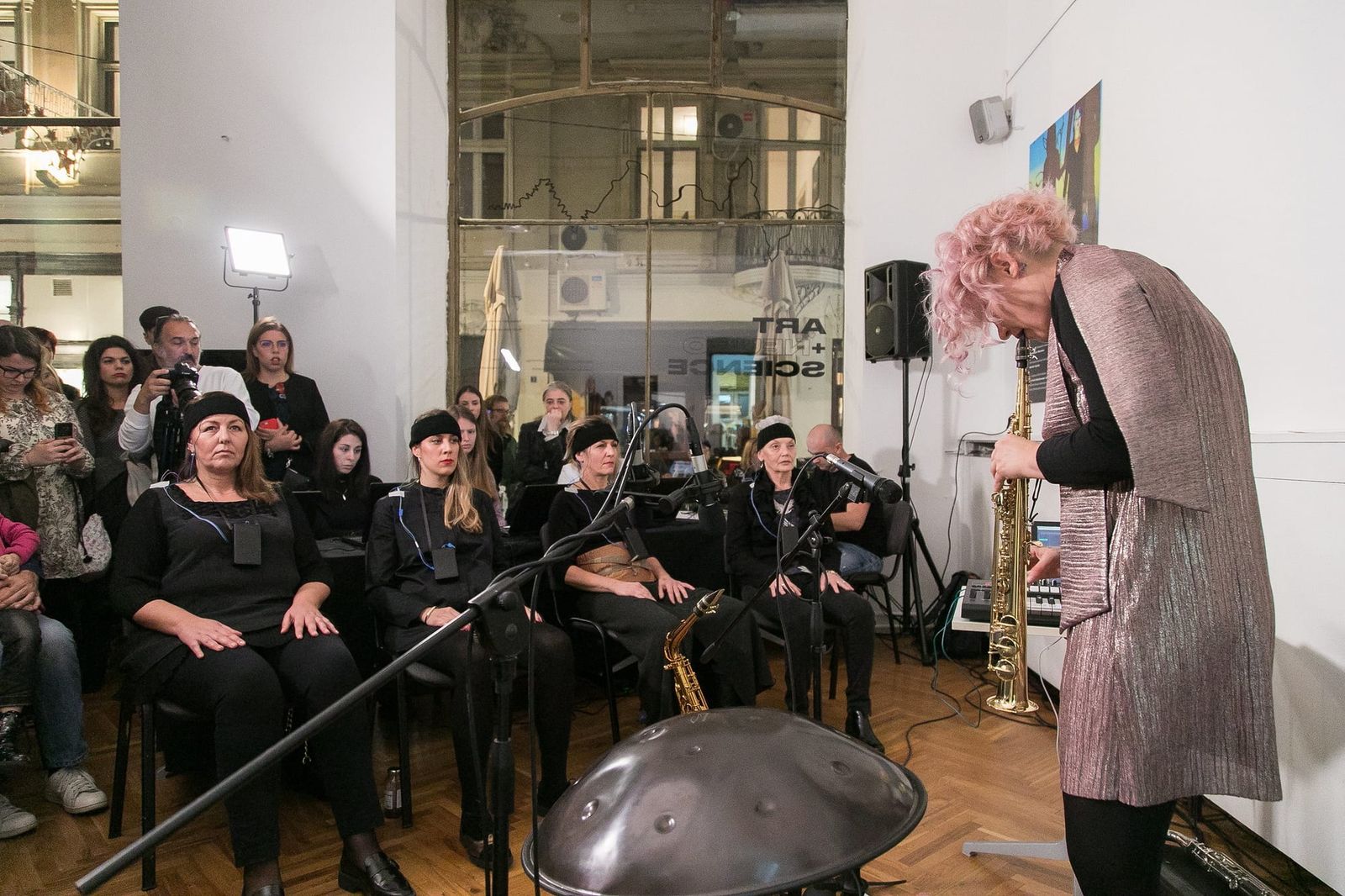
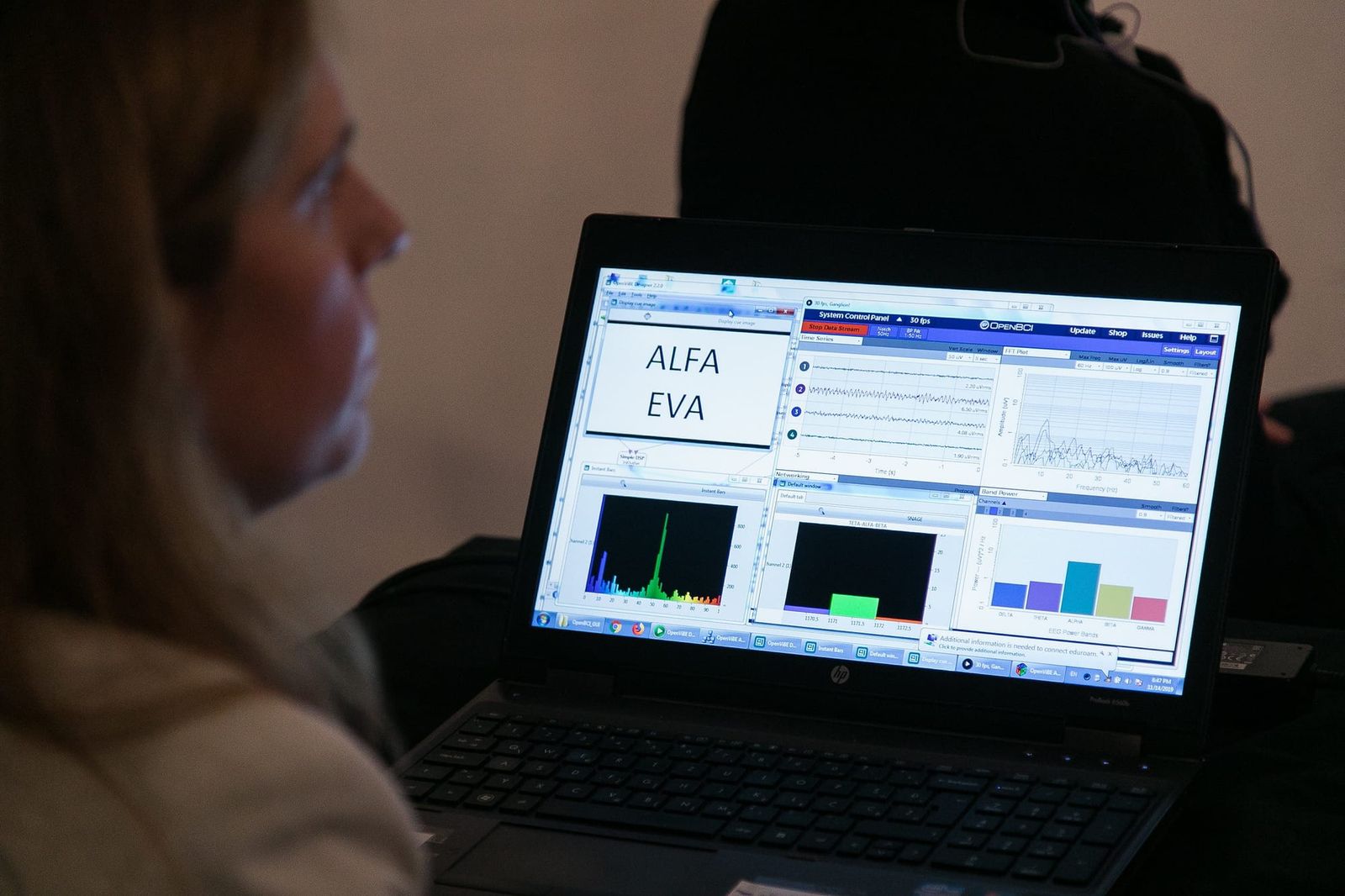
During the live performance, four mothers sat on stage facing the artist while listening to her musical improvisation and audio samples designed to evoke memories and emotions. Their brain activity was measured in real time using open-source EEG technology (OpenBCI), and the data was transformed into sound as part of the performance. The event combined science, improvisation, and emotion — inviting audiences to reflect on human connection and the neuroscience of empathy.
Collaboration Methodology
The project combined artistic composition, neuroscientific experimentation, and participatory engagement. EEG data were collected using affordable OpenBCI hardware and OpenVibe software, demonstrating that professional-quality neurodata could be gathered with accessible, open-source tools.
Workshops enabled researchers and students to experiment with real-time sonification, while mothers and daughters became collaborators, providing emotional and physiological input for the performance. The iterative process of testing, adapting, and performing created a genuinely co-created art–science experiment.
Interview
Case study based on an interview conducted with Dobrivoje Lale Érić, Head of the Department for International Cooperation and Selector of the art+science programme at the Center for the Promotion of Science (CPN) in Serbia (November 2025).
Successes
- Strong integration of science and art through accessible technology.
- Deep emotional and aesthetic impact on participants and audiences.
- Educational value through integration into curricula.
Challenges
- Brain adaptation (neuroplasticity) reduced responsiveness to repeated stimuli, requiring new participants to be found.
- Logistical challenges due to travel and scheduling.
- The abstract nature of the project made public communication complex, requiring additional explanatory materials such as posters, graphics, and expanded narratives.
Stakeholders & Participants

Artists
Jasna Jovićević – saxophonist, composer, and PhD student in Transdisciplinary Studies of Contemporary Arts and Media, Faculty of Media and Communication, Belgrade. Winner of the CPN’s 2019 AI Lab art+science national call.

Researchers
Assoc. Prof. Dr. Milica Janković (scientific mentor), Assoc. Prof. Dr. Jelena Ćertić, Dr. Nebojša Malešević, and students from the Biomedical Instrumentation and Technology Lab, University of Belgrade. They supported EEG calibration, data processing, and sonification. University students also participated in the workshops.

Citizens
Mothers and daughters of different generations and ages (from 4 years to over 50), including the artist’s own family members. Around 20 participants took part in workshops and recordings, with four mothers performing live.
Knowledge Valorisation

Main Outputs
- Live performance at SASA Gallery of Science and Technology, Belgrade (Nov 2019)
- Short documentary film and sound recordings shown in art+neuroscience 2019 exhibition
- Project documentation published in CPN’s art+neuroscience catalogue
- Academic paper by Jasna Jovićević (2020): “Composing the Actual: Brainwave Sonification as Materialized Music Composition Practice”

Societal Value
Increased public understanding of neuroscience and emotional communication; fostered empathy and dialogue about mental health and caregiving; female socio-emotional perspective and feminist theories.

Cultural Value
Merged art, music, and neuroscience into a unique sensory experience; expanded the possibilities of data-driven performance.
Knowledge Transfer
The collaboration influenced teaching at the University of Belgrade, integrating artistic methods into educational courses.

Creative Methods
EEG sonification, live performance with musical improvisations, documentary film, data-driven improvisation.

Unexpected Impact
Audience members described the performance as deeply moving, with some visibly emotional. The project demonstrated how art can evoke empathy through data and sound, turning scientific information into human experience.
Partcipatory processes
Joint Research
The collaboration integrated scientific and artistic inquiry. Researchers and students worked alongside the artist to explore how EEG data could represent emotional states through sound. The project prompted researchers to reflect on their own methods, realising the value of artistic interpretation in shaping new research perspectives. Results from the project were later integrated into lab workshops for students at the Faculty of Electrical Engineering.
Intermediation
The project connected musicians, neuroscientists and families in a shared creative process. Through workshops at both CPN’s Makers Lab and the university lab, participants co-produced data and exchanged knowledge about emotion, perception, and empathy.
Engagement
Mothers and daughters took part in the recording and performance process, shaping how stimuli were selected and interpreted. The team discovered that participants’ brains adapted to repeated exposure, diminishing responses over time; this led to the inclusion of new participants, underscoring the adaptability of human emotion and cognition.

Dissemination
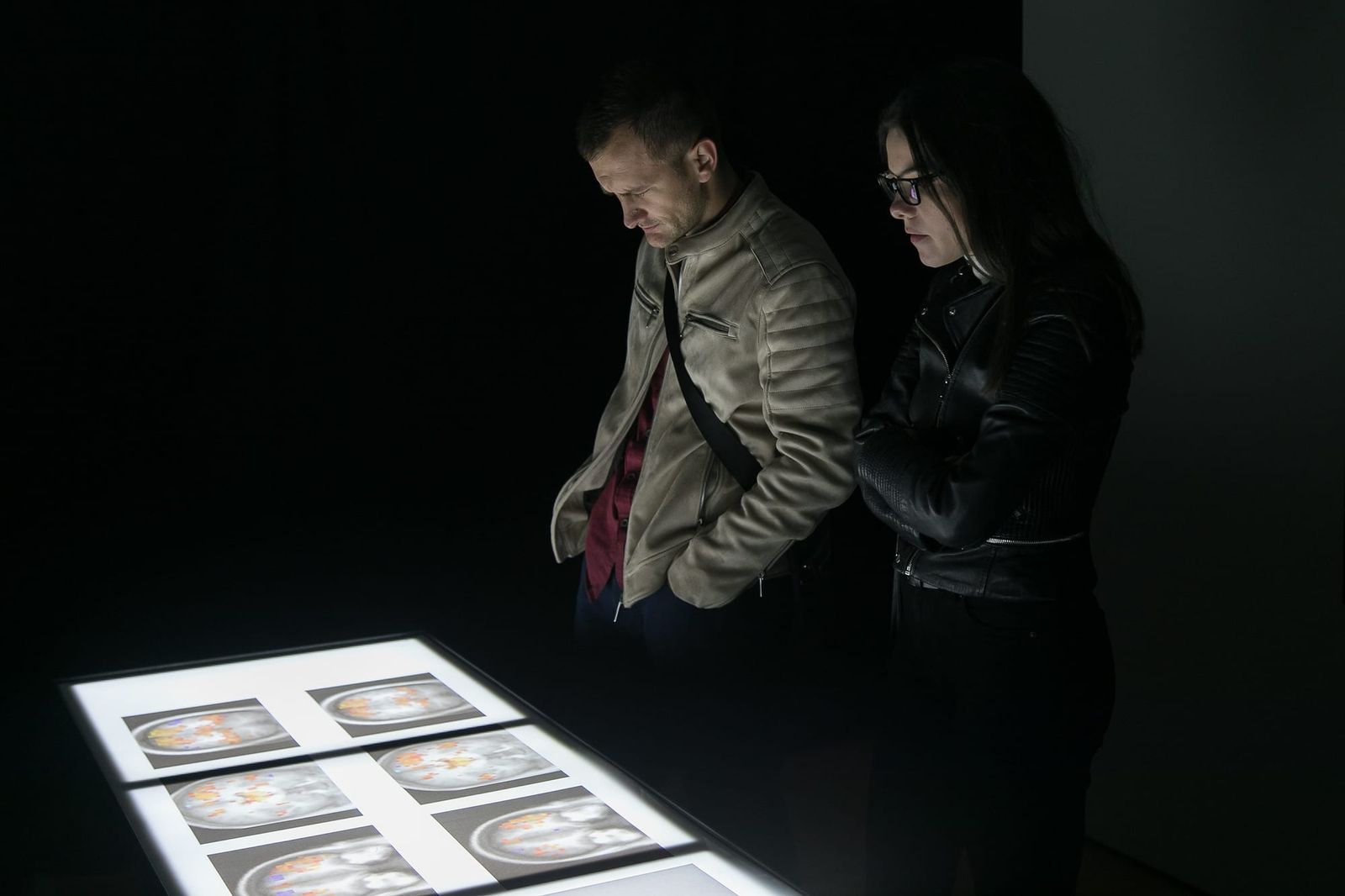
The final performance premiered at the Serbian Academy of Sciences and Arts (SASA) Gallery of Science and Technology, as part of CPN’s art+neuroscience 2019: World Behind the Eyes annual art-science exhibition. A short documentary and audio recordings were presented at the exhibition, allowing wider audiences to experience how data could be transformed into emotion and sound.
Explore
Further Info
- Jasna Jovićević’s I Sit and Worry About Her – interview and performance (film)
- Jasna Jovićević’s I Sit and Worry About Her – performance (film)
- The making of I Sit and Worry About Her (film)
- Jasna Jovićević – I Sit and Worry About Her (Bandcamp)
- CPN Art + Science Catalogue 2019 (PDF)
- CPN’s art+science programme portal