In(ter)vention
An immersive sound artwork where participants co-create the experience, exploring trust, belonging, and inclusion while offering new perspectives on participatory health research.
Country
Sweden
Duration
2023–2024
Lead partners
Uppsala University, Sweden, funded by the Swedish Research Council (Vetenskapsrådet).
Societal areas of impact
Health & Wellbeing, Equity, Diversity & Inclusion, Democracy & Civic Participation
Process
Joint research, Intermediation, Engagement, Dissemination
Brief Description
In(ter)vention: I felt like a human being grew out of public health researcher Dr Elin Inge's doctoral thesis on patient and public involvement (PPI) in research. It explored how research can be conducted collaboratively with people who have lived experience – including migrants, refugees, and patients.
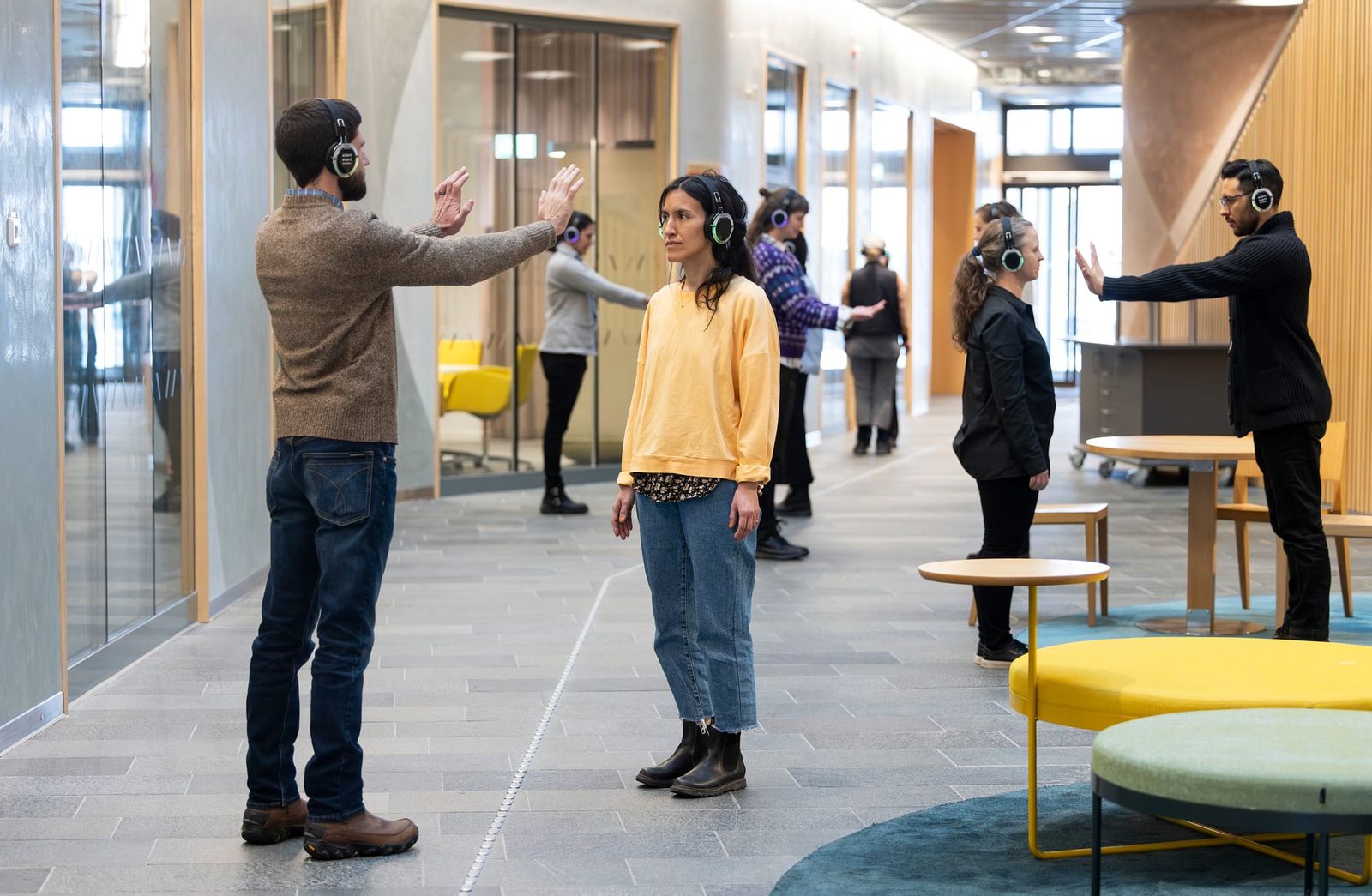
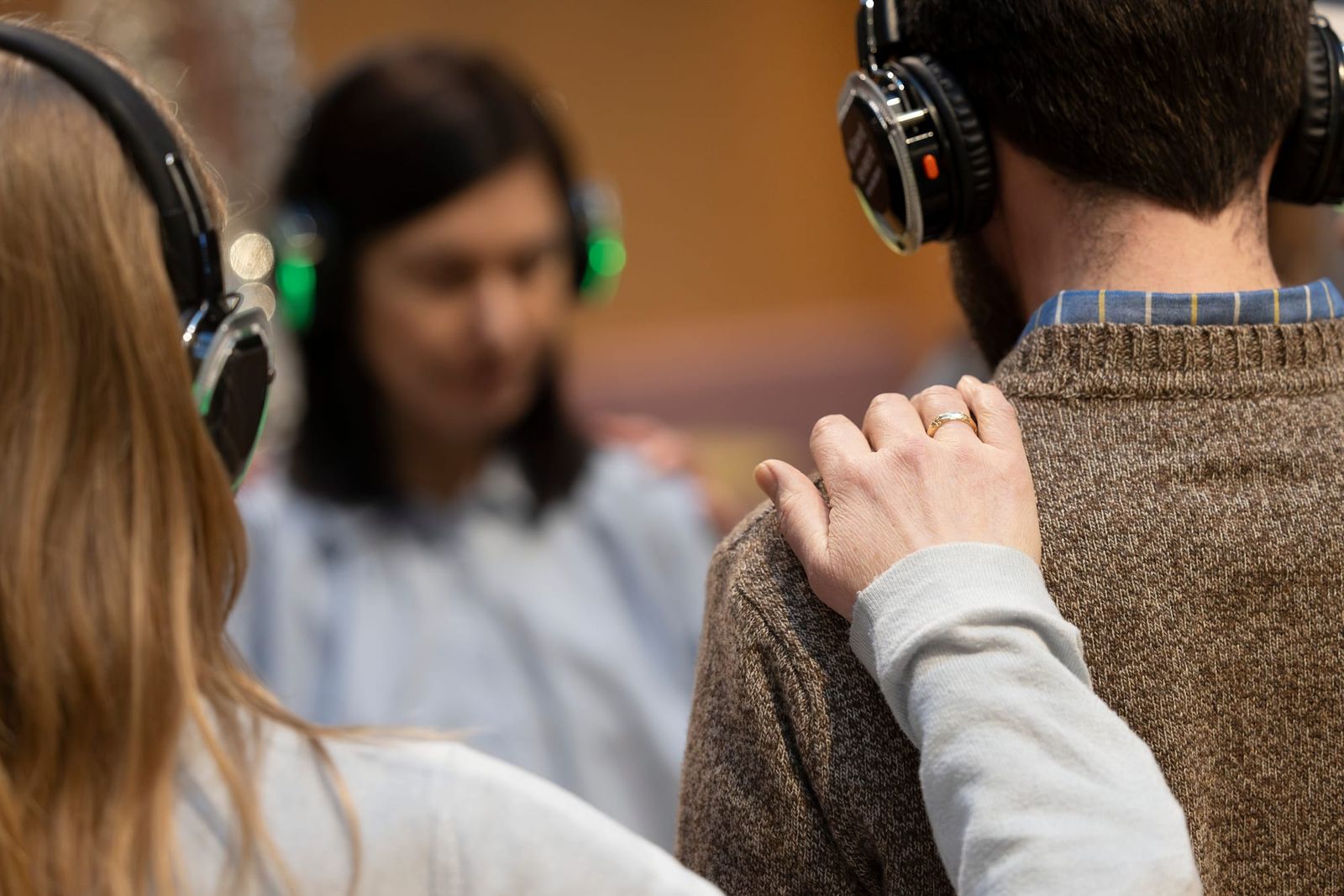
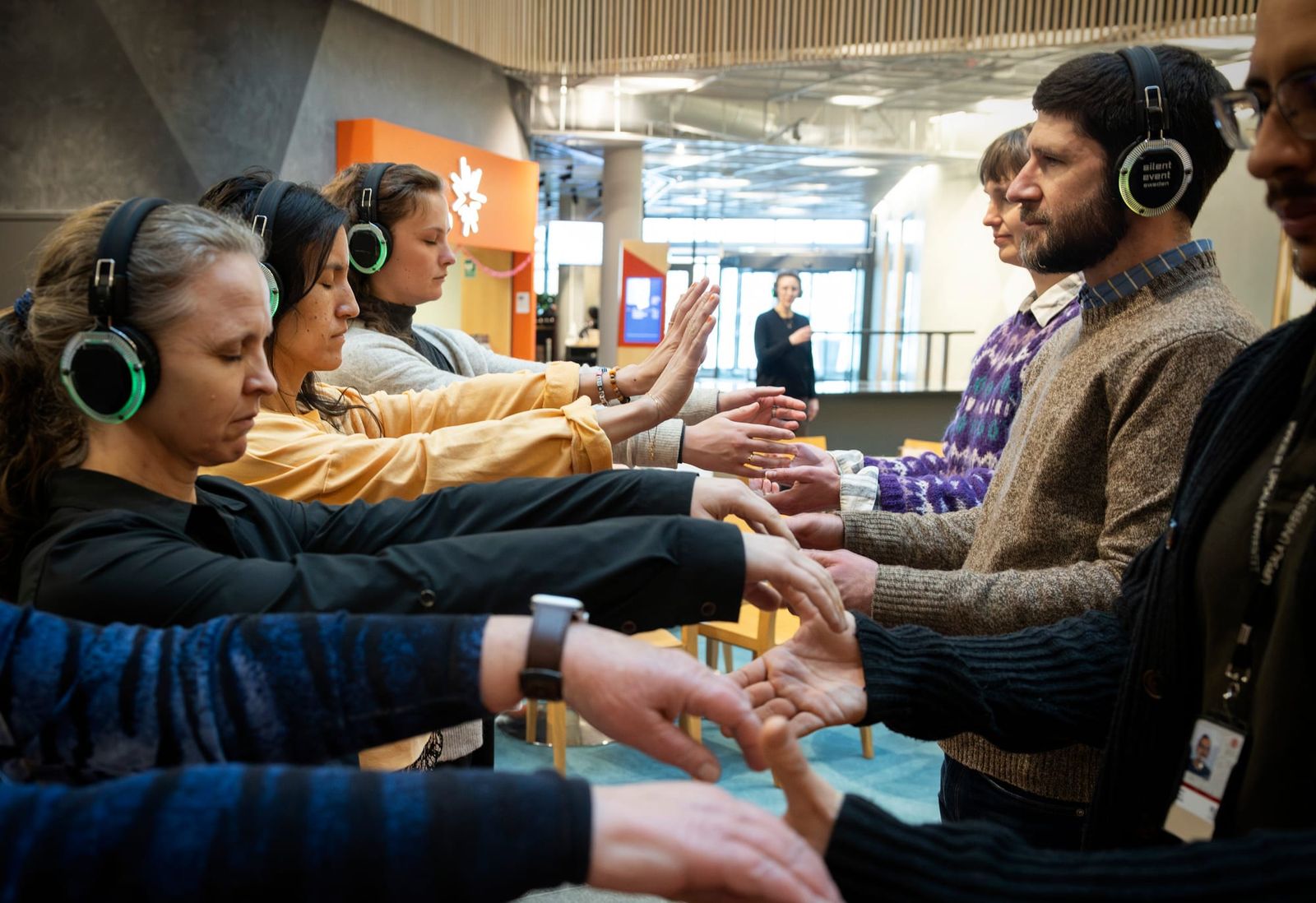
Composer and sound artist Anna Haglund was invited as artist-in-residence. She created an immersive sound artwork in which participants wear headphones and co-create the experience by following a guiding voice and interacting with each other. Each performance is lived and shaped by the participants themselves, blurring the line between audience and co-creator. The piece explores belonging, trust, and what it means to be part of a group.
The collaboration brought artistic and research perspectives into dialogue. For the researcher, the artwork offered new ways of interpreting qualitative data, translating words and interviews into feelings, atmospheres, and embodied experience. For audiences, the artwork provides a space to reflect on democracy, marginalisation, and human connection.
Collaboration Methodology
The collaboration began with the artist interviewing researchers and running workshops to understand their work and motivations, as well as observing everyday activities such as seminars, meetings, and informal lunches.
She used creative methods in which researchers, co-researchers, and other project team members participated:
- Life course mapping – participants visually traced important life events and influences, requiring deep personal reflection.
- The dark room exercise – participants closed their eyes and imagined the future artwork guided by the artist's voice, helping to identify expectations.
The partnership was exploratory: both sides admitted they did not initially understand each other's roles. This openness to "not knowing" became a key success factor, allowing them to learn and adapt together.
Interview
Case study based on an interview with Dr Elin Inge, public health researcher at Uppsala University (June 2025),
Successes
- Strong feedback from participants who found the experience deeply moving.
- Genuine co-creation with co-researchers ensured relevance and authenticity.
- Open, experimental approach allowed for mutual learning between artist and researchers.
Challenges
- Lack of clarity at the start about roles, responsibilities, and budget planning between the artist and researchers.
- Need for more explicit discussion about expectations and processes from the outset.
Needs Identified
- Involving the artist from the very beginning of a project.
- Transparency and humility as foundational values in cross-sector collaborations.
Stakeholders & Participants

Artists
Anna Haglund – composer and sound artist, previously engaged in co-creative processes with children and experienced in collaborating with researchers in different contexts, including as Artist in Residence at Södertörn University in Sweden.

Researchers
Dr Elin Inge – public health researcher at Uppsala University, focused on PPI. Led the project and integrated the artist into research activities.

Citizens
Audiences at exhibitions and performances become active participants. By putting on headphones and following the guiding voice, they act out the piece in real time, shaping the work through trust-based interactions.
Two co-researchers with lived experience of migration – who had previously collaborated with Dr Elin Inge – acted as advisors, contributing feedback on the artwork and ensuring authenticity of representation.

Other Stakeholders
Co-researchers: Two people with lived experience of migration, who had previously collaborated with Elin, acted as advisors. They contributed feedback on the artwork and ensured authenticity of representation.
Knowledge Valorisation

Main Outputs
- The immersive sound artwork In(ter)vention: I felt like a human being
- Exhibitions and performances at art museums, the Swedish Church, and Uppsala University
- Ongoing bookings, including at the art festival Flock in Falun (September 2025) and several academic conferences
- A handbook and educational materials on patient and public involvement (PPI), produced as related outputs from the doctoral research

Societal Value
Provided participants and audiences with powerful experiences of trust and belonging; encouraged reflection on inclusion, marginalisation, and democracy.

Cultural Value
Opened new artistic ground for sound-based participatory works connected to health and social research.
Knowledge Transfer
The artwork continues to have a life of its own, reaching new audiences across cultural and institutional contexts. Insights from the project have influenced how patient and public involvement (PPI) is discussed and practised in health research.

Creative Methods
Immersive sound design, guided participatory interaction, life course mapping, the dark room exercise for expectation-setting, and embodied co-creation during live performances.

Unexpected Impact
For the researcher, the process revealed new emotional and interpretive layers in her qualitative data analysis – an unanticipated knowledge gain that deepened her understanding of her own research material.
Partcipatory processes
Joint Research
The co-researchers with lived migration experience advised on both the research and the artistic process. The artwork helped the researcher see her own qualitative data differently, gaining new emotional and interpretive layers that translated words and interviews into feelings and embodied understanding.
Intermediation
An exhibition at an art museum created an arena where audiences could experience the artwork while researchers explained the study, fostering dialogue and new networks between artistic, research, and public contexts.
Engagement
Each presentation of the sound artwork is not a passive experience but a live co-creation. By putting on headphones and following the guiding voice, audience members become performers themselves, shaping the work through trust-based interactions. The piece is lived by participants, providing a powerful shared encounter that combines art and research.
Dissemination
While the artist resists framing the piece as science communication, the exhibitions provide opportunities for the researcher to discuss her work publicly. The artwork functions as an artistic interpretation of the research – a vehicle for reflection rather than explanation – reaching new audiences across cultural and institutional contexts.
Explore
Further Info
Project website: Uppsala University – In(ter)vention