Who speaks the machine?
Exhibitions designed as experimental environments study how audiences interpret AI-mediated artworks, and how this changes when they learn about the artistic process.
Country
Belgium
Duration
PhD started September 2023; major exhibition planned for October 2026
Lead partners
KU Leuven, Department of Art History (Belgium)
Societal areas of impact
Culture, Memory & Identity
Process
Joint research, Intermediation, Engagement, Dissemination
Brief Description
Who speaks the machine? is an art–science research project exploring how artificial intelligence (AI) influences the creation, interpretation, and experience of art. Developed by Michiel Willems as part of his PhD in art history at KU Leuven, the project investigates how viewers perceive AI-mediated artworks and how this perception changes when they are given information about the role of AI in the artistic process.
The project combines art historical inquiry with empirical research methods. It examines not only how AI is used as a tool in artistic production, but also how knowledge about that process shapes audience interpretation, emotional response, and aesthetic judgement.
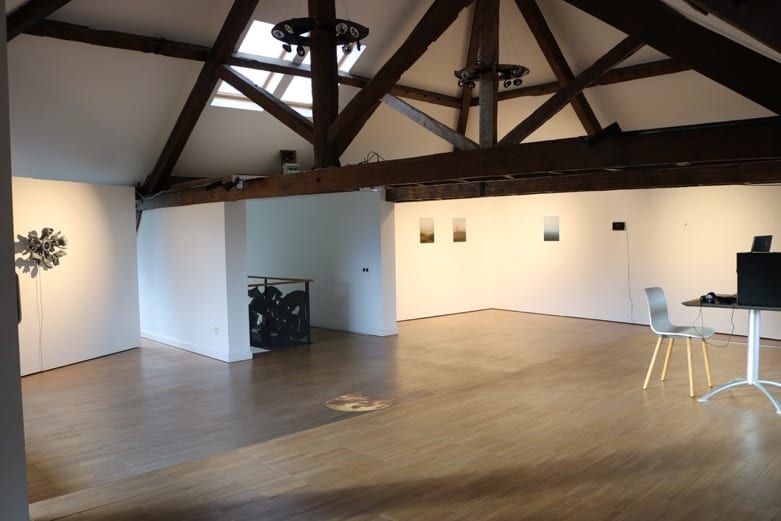
An initial pilot exhibition, Unbound Dialogue, presented works by six international artists without disclosing the use of AI. Visitors were later informed about the AI component and interviewed about how this knowledge affected their interpretation. Around 40 participants took part, providing qualitative insights into perception and meaning-making.
Building on this, a larger-scale exhibition planned for 2026 will involve five artists working across media including installation, painting, video, interactive systems, and game-based artworks. Visitors will encounter the exhibition under different conditions of “process disclosure” – receiving varying levels of information about how AI was used – allowing researchers to systematically compare how knowledge influences engagement, interpretation, and appreciation.
The project ultimately aims to develop new frameworks for understanding and presenting AI-mediated art in both academic and public contexts.
Collaboration Methodology
The project combines curatorial practice with experimental research design. Exhibitions are used as controlled environments in which audience perception can be studied systematically.
Participants typically experience the exhibition individually, without guidance, before completing surveys and/or interviews. In the main study, different groups will receive different levels of information about the artistic process, enabling comparison of how “process disclosure” affects interpretation and appreciation.
Interview
Case study based on an interview with Michiel Willems (April 2026).
Successes
- Strong engagement from artists interested in audience feedback and research collaboration
- Development of a robust experimental framework within an exhibition setting
Challenges
- Recruiting sufficient numbers of participants for experimental validity
- Technical challenges associated with AI-based artworks
- Difficulty securing exhibition spaces due to long-term gallery programming cycles
Needs Identified
- Strong interdisciplinary collaboration between artists, researchers, and institutions
- Adequate funding and access to exhibition spaces
- Clear and relevant research questions addressing real societal concerns about AI
Stakeholders & Participants

Artists
Five artists (from Belgium, the Netherlands, and Germany) will participate in the main exhibition. They work across digital and media art and are experienced in using AI as part of their creative practice.
Artists are recruited through professional networks and recommendations. They are involved as collaborators, contributing artworks and engaging in dialogue about their processes. Many are motivated by the opportunity to gain structured audience feedback and to contribute to research on AI in art.

Researchers
The project is led by Michiel Willems (PhD researcher in art history) within the Department of Art History at KU Leuven, supported by his supervisors (Prof. Dr. Koenraad Brosens, Prof. Dr. Johan Wagemans, and Dr Stefanie De Winter) and the research group PALETTES. The research sits within a broader interdisciplinary context that includes perception, aesthetics, and empirical approaches to art experience.

Citizens
Members of the public are central participants. In the pilot phase, around 40 participants took part in exhibition visits and in-depth interviews. The upcoming exhibition aims to involve approximately 100 research participants, alongside a wider general audience visiting the exhibition.
Participants are recruited through open calls, social media, university networks, and flyers. They engage by visiting the exhibition, completing surveys, and taking part in interviews, contributing directly to the research data.
Knowledge Valorisation

Main Outputs
- Art exhibitions (pilot and a larger three-week exhibition to be shown at BAC ART Lab in October 2026)
- Empirical research data on audience perception
- Academic publications (planned and forthcoming)
- Contributions to art discourse (magazines, conferences, symposium)

Societal Value
The project addresses widespread public questions and concerns about AI by providing evidence-based insights into how people perceive AI-generated or AI-assisted art. It contributes to more informed public understanding of AI and its role in culture.

Cultural Value
It supports artists working with AI by offering new ways to understand audience engagement and by contributing to emerging frameworks for exhibiting AI-mediated art.
Knowledge Transfer
Findings aim to inform artists, curators, and cultural institutions about how to present AI-based artworks, particularly regarding the importance of transparency and contextual information.

Creative Methods
Exhibitions as experimental environments; AI-based artworks across multiple media; interviews and perception studies integrated into artistic contexts.
Partcipatory processes
Joint Research
Visitors actively contribute to the generation of new knowledge by participating in structured experiments on art perception. Their responses – before and after learning about AI involvement – form the basis for empirical research into how meaning and value are constructed in AI-mediated art.
Intermediation
The project creates connections between artists, researchers, and audiences, particularly through a planned workshop that will bring together artists, curators, and other stakeholders to discuss findings and implications for exhibiting AI-based art.
Engagement
The exhibition itself acts as a participatory research environment. Visitors engage individually with artworks, complete surveys, and reflect on their interpretations, creating a hybrid space between gallery and research lab.

Dissemination
Findings will be shared through academic publications, conferences, and art-focused platforms such as magazines and exhibitions. A public symposium is also planned to communicate results and foster dialogue across sectors.
Explore
Further Info
- KU Leuven PALETTES research programme: palettes.group
- Links to the papers will be added once they are published.