Windows of the Soul
An art–science exhibition translating lived experiences of sight loss into visual, tactile, and sound works, deepening public understanding and influencing how clinicians engage with patients.
Duration
2021–2022 + 2024
Lead partners
University College London (UCL) in partnership with Moorfields Eye Hospital, London, and NIHR Moorfields Biomedical Research Centre
Societal areas of impact
Health & Wellbeing, Equity, Diversity & Inclusion
Process
Joint research, Intermediation, Engagement, Dissemination
Brief Description
Windows of the Soul is an art–science project that explored the lived visual experience of sight loss. Visually impaired artists, sighted artists, and ophthalmology researchers worked together with people with sight conditions to develop a body of work that reflects how individuals see, feel, and experience the world. The exhibition brought together independently produced artworks and collaborative pieces shaped through dialogue, where participants described their visual perceptions and artists interpreted or re-created these experiences through visual, tactile, and digital forms.
The project began as a small, grant-funded initiative led by ophthalmologists Dr Siegfried Wagner and Dr Caroline Kilduff, who noticed that patients often use artistic language to describe their changing vision. The resulting Windows of the Soul exhibition — online and at venues including the Bloomsbury Festival and Moorfields Eye Hospital — showcased more than 80 works, from Braille art, print and painting to sound, prose, and animation.
Collaboration Methodology
The project evolved organically rather than through formal workshop structures. COVID-19 restrictions and the fact that participants were spread across the country meant that most collaboration took place remotely, using whatever communication channels best suited people's accessibility needs — such as email compatible with screen readers, tactile responses to artworks, or descriptive exchanges about visual perception. This flexible, adaptive approach enabled everyone to participate in ways that were meaningful and accessible to them.
Interview
Dr Caroline Kilduff, Ophthalmologist, Moorfields Eye Hospital (December 2025)
Successes
- Created a platform that visually demonstrated the breadth of sight conditions and how they affect people in different ways, contributing to wider public education about visual impairment.
- Empowered artists with visual impairment by increasing their visibility and confidence.
- Enabled researchers to develop a broad range of skills related to project management, as well as new perspectives — including deeper insight into lived visual experience and new ways of integrating patient involvement into their work.
- Winner of the NIHR Moorfields Biomedical Research Centre PPIE Award 2022 and a Wandsworth Arts Fringe grant in 2022.
Challenges
- COVID-19 restrictions made in-person collaboration and exhibition planning difficult, leading to the development of an online version first.
- Logistics of transporting artworks from different locations around the country safely on a limited budget.
Stakeholders & Participants

Artists
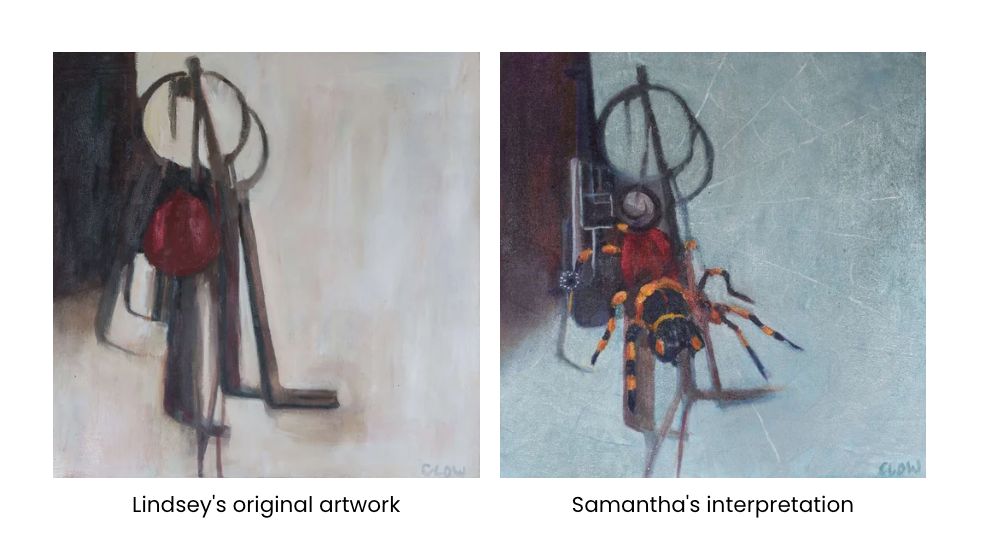
Visually impaired and sighted professional artists collaborated as equal partners. Some artists were identified through charities such as Fight for Sight and the Macular Society. Artists created new pieces and one professional artist reinterpreted her existing artwork based on feedback from visually impaired participants. Media included painting, printmaking, Braille and tactile art, textiles, sound art, animation, and prose.

Researchers
Ophthalmologists Dr Siegfried Wagner and Dr Caroline Kilduff initiated the project. Both were struck by the artistic language patients used to describe their changing vision and wanted to understand these experiences more fully. Caroline first developed the idea of interpreting visually impaired people’s descriptions of artwork, while Siegfried secured initial funding through UCL Culture to launch a community-based art project

Citizens
People with lived experience of visual impairment were central to the project. They created artworks and contributed personal accounts of their visual experiences that shaped the exhibition content. The general public engaged with the exhibitions in person and online. Games design students interpreted one participant's Charles Bonnet Syndrome hallucinations into animations.

Other Stakeholders
- UCL Public Engagement team
- Loft Digital (website design)
- Bloomsbury Festival (curation support)
- Fight for Sight and Macular Society (artist identification)
Knowledge Valorisation

Main Outputs
- Online and touring physical exhibition (Bloomsbury Festival, Lumen United Reformed Church, Moorfields Eye Hospital, Wandsworth Arts Fringe, and EUNOS conference in Rotterdam, 2024)
- Symposium with participating artists
- 80+ artworks across painting, printmaking, Braille and tactile art, sound art, animation, and prose
- Project website hosting the online exhibition

Societal Value
Improved public understanding of visual impairment and challenged common stereotypes about sight conditions. The exhibitions helped audiences understand others' experiences and recognise aspects of their own lives in the artworks, reducing feelings of isolation.

Cultural Value
The project provided a meaningful platform for artists with visual impairment, increasing their visibility and supporting their artistic development. For some participants, it opened new creative and professional opportunities — for one participant it marked the beginning of an art career. The project also challenged perceptions within the arts community: one artist reflected it was the first time he had been treated as an artist, not a disabled artist, highlighting a shift toward recognising artists with sight conditions on equal terms with sighted peers.
Knowledge Transfer
The project directly informed clinical practice. Both leading ophthalmologists reported changes in how they listen to and interact with patients. Dr Wagner continues to consult participating patients for feedback on his research ideas and has embedded public engagement into multiple research grants since the project's completion.

Creative Methods
Visual art, Braille and tactile art, sound art, animation, and prose were used to represent the lived experiences of sight loss. Collaborative methods included artists re-creating works based on verbal or tactile descriptions from people with visual impairment, and games design students translating hallucination experiences into animations.

Unexpected Impact
The exhibition created a sense of connection among people with similar conditions. Visitor feedback showed that people felt less isolated after recognising their own experiences represented in others' work.
Partcipatory processes
Joint Research
Participants explored how art could capture the sensory and emotional dimensions of visual impairment. The process not only produced artworks but also informed the clinicians' understanding of how patients describe and experience vision. Dr Wagner reflected that participants' stories now serve as a sounding board for understanding the strengths and limits of using eye scans in research.
Intermediation
The project created connections between researchers, artists, and people with visual impairment. Collaboration emerged organically as participants developed their own accessible ways of communicating and creating, either together or through dialogue that shaped independent artworks.
Engagement
Engagement took different forms: one artist sent her artworks to visually impaired participants, who described what they saw so she could re-create the works based on their perceptions — with one blind participant responding through touch. Another participant shared her Charles Bonnet Syndrome hallucinations, which games design students interpreted into animations.
Dissemination
Via online and physical exhibitions to public audiences. The physical exhibition was accompanied by a symposium where participating artists shared personal reflections on their work with Windows of the Soul and their experience of being an artist with a visual impairment. The online exhibition also offered additional educational value by including descriptions of different eye conditions and experiences. Coverage included BBC News, RNIB Radio, The Ophthalmologist, Eye News, and NIHR Moorfields BRC and UCL news channels.